
You like your running shoes. They fit, they feel good, and they have yet to give you a reason to complain. Then a friend starts raving about another pair, and suddenly you’re browsing. Fortunately, shoe loyalty does not involve vows.
The useful starting point is the pair you already know. Figure out what you want to keep, decide what you might change, then compare a few options on your feet. Curiosity is a perfectly good reason to try something else. It is also perfectly fine to discover that your favorite is still your favorite.
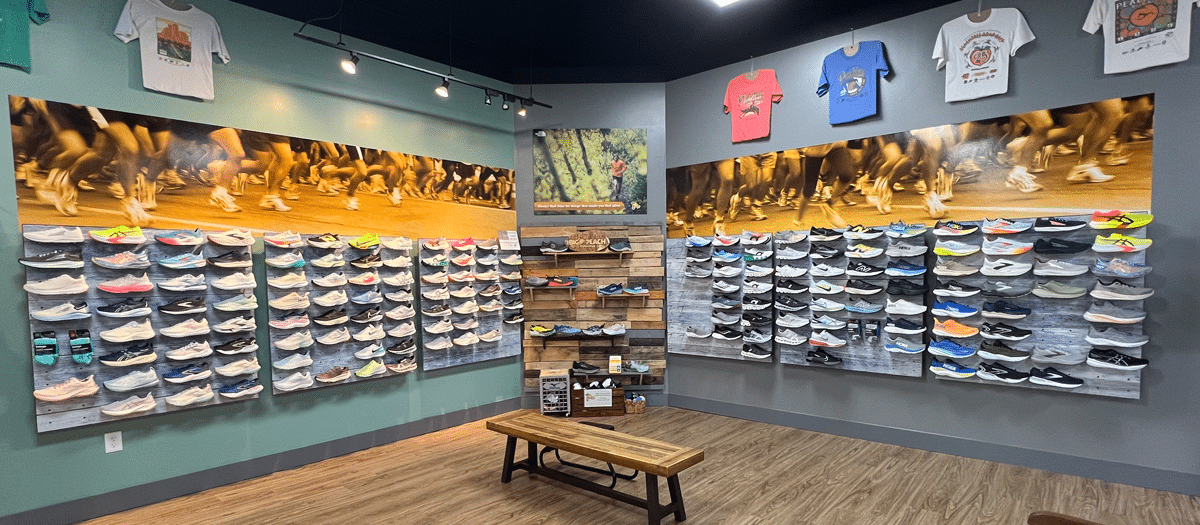
Start With What Your Current Shoes Get Right
“What shoes are similar to mine?” sounds straightforward until you ask: similar in what way? You might love the cushioning but want more room at the front. Or the fit might be excellent, while the ride feels a little clunky when you pick up the pace.
Think about the details you notice. Does your heel stay put? Can your toes spread comfortably in three dimensions? Do you like a soft, floating feel, a firmer, connected feel or a smooth roll through each step?
You do not need a working knowledge of midsole chemistry. “I like these, but my little toe would like to register a complaint” gives us something useful to work with.
Give the Next Pair a Job
Finish this sentence: “I like my current shoes because _____, but I wish they _____.” Then tell us what the next pair needs to do.
A shoe for everyday runs has a different assignment from one reserved for race day. Walking the dog and spending a full shift on your feet deserve consideration too. The dog, for the record, is unlikely to be impressed by your race-day footwear but IS likely to be impressed by your desire to go for a walk or run.
Be specific about the change. “More room around my toes” is useful. “Something better” leaves quite a lot open to interpretation. A clear goal helps us choose a few worthwhile comparisons instead of introducing you to the entire shoe wall.
More Toe Room Does Not Always Mean a Longer Shoe
A shoe can have enough space beyond your longest toe and still squeeze from the sides or press from above. Length, width and the space inside the upper all contribute to fit, and the shape of the toe box matters too.
Going up a size may help when a shoe is too short. If length is already right, another width or a different shape may give you the room you want while keeping your heel secure. This is worth sorting out before you buy a larger version of the same problem.
Build a Shortlist Before You Visit
You can ask Footwear Guru, Big Peach’s digital footwear-assistant, to help narrow the options with a question like this:
“I wear [model and version]. I like the cushioning and secure heel, but I’d like more room around my toes. I’ll use the next pair for easy runs and walking. What are two or three shoes worth comparing, and how might they feel different?”
Add your budget or clarify what “soft” means to you, then bring the resulting shortlist and your questions into the store to try the shoes.
Let Your Feet Have a Vote
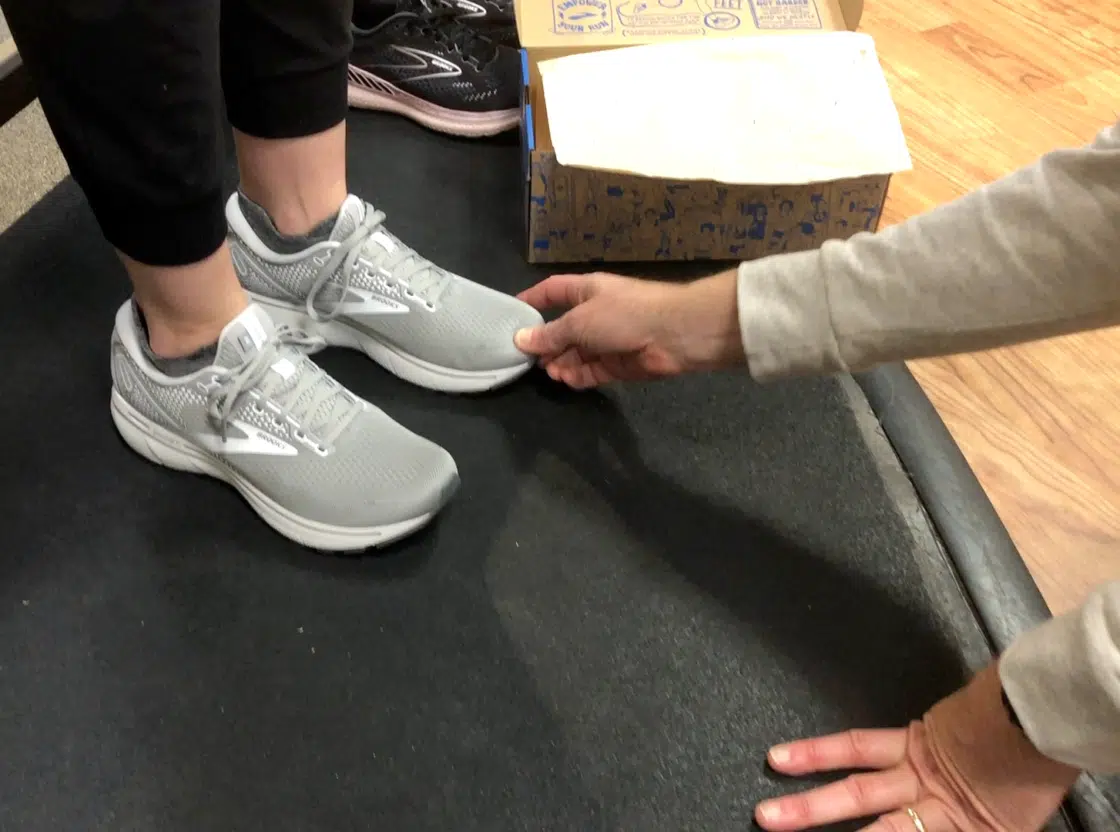
Bring your current pair and the socks you normally wear to Big Peach Running Co. East Cobb. Our Fit Process starts with how you will use the shoes and helps you compare fit, feel and movement.
Walk around, jog if appropriate (feel free to hop on the awesome Wahoo KICKR RUN treadmill), and tell us what you notice. “This one feels smoother” and “I liked the first pair better” are both useful feedback. A shoe’s impressive résumé does not oblige you to like it.
One detail to remember: a well-worn pair is an imperfect reference for how that shoe felt when it was new. Wear changes shoes, so a fresh pair of the same model can be a useful comparison when available.
You may leave with a new favorite. You may choose another pair of the shoe you came in wearing. Either way, bring the old ones along. We promise not to take their side.
FAQs About Finding Similar Running Shoes
Start with your current model and version, what you like about it, and what you would change. Similar cushioning does not guarantee a similar fit. Use those preferences to build a shortlist, then compare the shoes in person.
Only if more length is what you need. A different width, toe-box shape or amount of space inside the upper may solve the problem more effectively. Check heel security as well as toe room.
No. Another pair of a shoe that suits you may be the right choice. If the model has been updated, try the new version before assuming it will fit and feel the same.
Use it to compare options, ask follow-up questions and save notes to bring into the store. If you want particular shoes waiting, Reserve to Try lets you request up to three pairs. Send the prepared email; the store confirms availability and your 48-hour hold. Your foot’s opinion after getting to experience them is the final opinion (and really the only one that matters).