
You started by looking for a shoe for Saturday’s long run and somehow ended up comparing carbon fiber, nylon and something called “supercritical foam.” Fortunately, the foam does not pass judgment on your running. But the shopping has become considerably more technical than expected.
Does an everyday running shoe need a plate now? No. You can get plenty of cushioning and a lively ride without one. A plated trainer may be a great match, but the reason to choose it should be what it does for your running. Your current shoes have not become obsolete while you were out in them.
What a plate actually changes
A plate sits inside the midsole and adds resistance to bending, especially through the forefoot. Working with the foam and the shoe’s shape, it can create a more directed, rolling sensation as you move toward toe-off. Some runners describe that feeling as a helpful push. Others notice stiffness they would rather do without.
Foam supplies cushioning and rebound, while a curved sole, often called a rocker, helps shape the transition through each step. Those pieces work together. The plate gets a lot of attention, but it is only part of the shoe you are buying.
Carbon and nylon feel different
Carbon-fiber plates generally provide more rigidity than nylon plates. Paired with responsive foam and the right geometry, that can produce a pronounced propulsive feel, particularly when you pick up the pace. A shoe that feels a little demanding during a gentle jog may start to make more sense when you run harder.
Nylon generally allows more give. Its sensation can be less forceful and more forgiving, which may suit a wider mix of everyday paces. Think of easing through a recovery run or shortening your stride up a hill. You may prefer a shoe that bends more readily to one that feels as though it keeps asking you to hurry up. The hill is already making enough requests.
These are tendencies, not absolutes. Plate shape, thickness and placement matter, and more force does not automatically produce more benefit from a carbon plate. There is no universal pace at which carbon suddenly starts working. The real question is whether the complete shoe makes your intended run feel smoother and easier.
If you feel as though you are working around the shoe’s stiffness, a more forgiving nylon design may help. So might leaving the plate out altogether and choosing a responsive foam. These are the comparisons to consider when selecting a shoe that will handle most of your daily miles.
Plenty of bounce without a plate
The ASICS NOVABLAST, SUPERBLAST and MEGABLAST offer three surprisingly differentiated ways to explore what we call the “Bounce” category. All are plate-free, with different combinations of foam and geometry. NOVABLAST covers versatile daily training; SUPERBLAST emphasizes cushioning for longer outings; MEGABLAST puts a particularly lively foam at the center of the experience. MEGABLAST can give you the energetic sensation you might associate with a plated shoe, despite having no plate inside.
Saucony’s Endorphin Azura belongs in that conversation too. Its responsive PWRRUN PB foam and rolling geometry offer another way to get an energetic trainer without adding a plate. “No plate” leaves quite a lot of shoe to enjoy.
For a plated comparison, Nike’s Zoom Fly 6 uses carbon fiber in a training shoe, while Brooks’ Hyperion Max 4 trainer uses a nylon SpeedVault plate and HOKA’s Mach X 3 uses a Pebax (plastic) plate. These show why “plated” does not automatically mean “race day.” They also give you a useful opportunity to feel how different combinations of foam, plate and shape behave underfoot.
If racing is part of the plan, Saucony’s carbon-plated Endorphin Pro 5 adds a race-focused option. You do not need an elite finishing time to try a super shoe. You do need to like how it fits and feels, and decide whether its strengths suit the running you want it for.
Give your everyday shoe an everyday test
Start with where most of your miles happen. Easy neighborhood runs? Longer weekend outings? A mixture of steady running and faster workouts? If the same pair also handles walking, include that in the conversation.
Then compare shoes at the pace you actually expect to use. The brief burst where you suddenly run faster because someone is watching is entertaining, but your Saturday long run pace deserves representation too.
Notice whether you can settle into your usual rhythm, whether each step rolls through comfortably and how the shoe behaves when you slow down. If you will walk in it, walk in it. A shoe that shines during a faster workout may earn a place in your rotation without becoming the pair you reach for every morning.
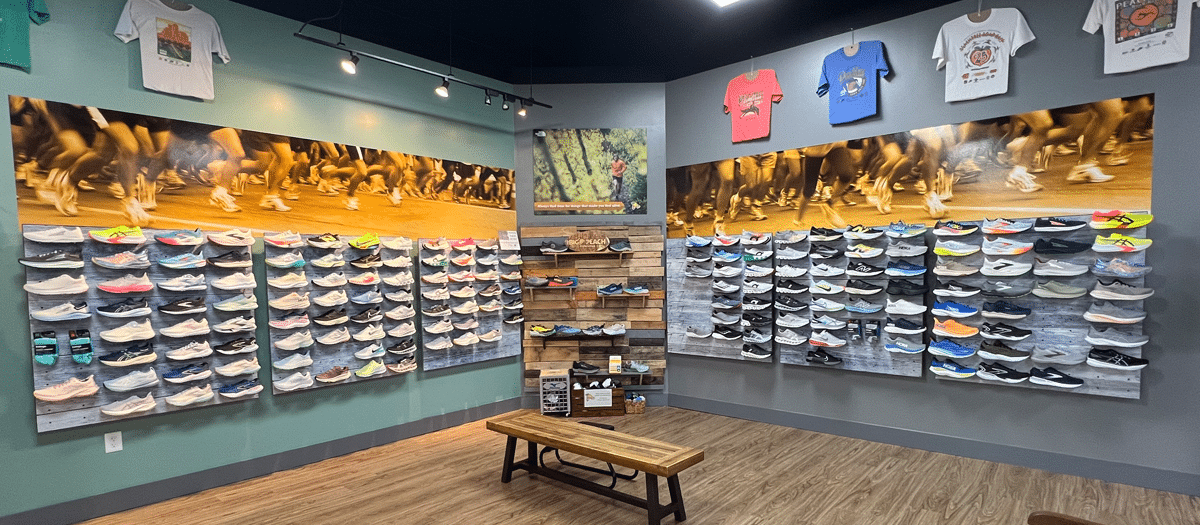
Bring the question to Big Peach East Cobb
Before walking through the front door at Big Peach East Cobb, try asking Big Peach Footwear Guru something like: “I want a lively shoe for easy runs and occasional faster workouts, but I dislike too much stiffness. Which plated and unplated options should I compare?”
Bring those notes and your current shoes to Big Peach Running Co. East Cobb. Our fit-first, research-informed Fit Process starts with what you need the shoe to do, then uses fit, feel and movement to refine the choice. “This one feels easier when I slow down” is the type of feedback that we can build upon. The materials-science degree is entirely optional.
FAQs About Plated Running Shoes
No. Plated and unplated shoes can both serve daily training. Choose for your intended use, fit and comfort at the paces you actually run.
Carbon plates are generally stiffer and can contribute to a stronger propulsive sensation. Nylon usually allows more flex and may feel more forgiving. The complete shoe and the runner determine how those differences play out.
No. Nike’s carbon-plated Zoom Fly 6, Brooks’ nylon-plated Hyperion Max 4 and Hoka’s plastic-plated Mach X 3 are training examples. Saucony’s carbon-plated Endorphin Pro 5 is designed for racing.
Yes. Responsive foam and shoe geometry can create a lively ride. ASICS MEGABLAST and Saucony Endorphin Azura are two plate-free examples.
Describe your usual runs, preferred feel and fit needs. Big Peach Footwear Guru can help you understand the options and arrive with a smarter starting point. Finish the comparison in store, where you can try the shoes and decide what works for you.