
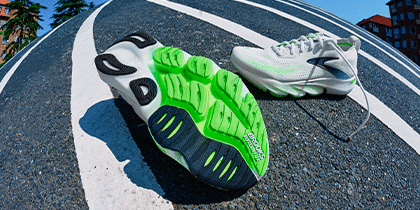
Some running shoes are born in a lab. Some are born in a boardroom. The Brooks Glycerin Flex was born in a more interesting place. It started as a quiet pattern Brooks kept hearing from runners while researching cushioning. Not the loud, obvious feedback. The little recurring comment that shows up when you’re listening closely and not just collecting survey scores:
“I love the protection… but I miss feeling my foot work.”
That single idea sat on the shelf for a while. Not because Brooks forgot it, but because you can’t force timing in footwear. Sometimes the runner is ready before the materials are. Sometimes the tech arrives before the story makes sense. And sometimes the right concept needs a few years of simmering before it becomes a shoe you can actually lace up and run in.
And that’s how you end up with the newest member of the Glycerin family: Glycerin, Glycerin GTS, Glycerin Max, and now the Glycerin Flex. Same family promise, completely different personality.
The “Wait… That’s A Thing?” Insight That Wouldn’t Go Away
Brooks product line manager Sara Najjar can trace the Flex story back to 2019, during runner insight sessions focused on cushioning. The team was gathering feedback on what people loved about softer landings, assisted transitions, and the modern era of “let the shoe help you a little.”
But a consistent counterpoint kept showing up.
Runners wanted a shoe that protected them and let them feel more connected to the run. More “foot in charge.” Less “I’m along for the ride.” Maybe think of it as a little like music production. Cushioning with assistance can turn into noise-canceling headphones. Great for long days, but sometimes you want to hear the room again.
That runner desire kept reappearing across multiple insight cycles, which is usually the universe telling a product team, “Hey, this is not a one-off opinion.”
Why The Flex Belongs In The Glycerin Family
If you’re going to make a shoe that’s different, the safe move would be to give it a totally new name and pretend you’re not messing with an icon.
Brooks did the opposite.
They anchored the Flex inside the Glycerin line on purpose, because the goal was not to create a weird science project shoe. The goal was to deliver a new experience while keeping the Glycerin promise intact: comfort, protection, and that “I could run forever in this” confidence.
In the lineup, here’s the vibe:
- Glycerin: classic premium neutral cushioning
- Glycerin GTS: that same comfort with structured guidance built in
- Glycerin Max: the “help me keep rolling” experience, more assistance, more momentum
- Glycerin Flex: the “let my foot move” experience, more adaptability, more natural motion
The Flex is not trying to replace the Glycerin. It’s trying to give the runner another option inside the same comfort universe.
Built From Brooks “Deep Cuts” (And A Few Fan Favorites)
One of the most fun parts of this story is that the Flex is not a brand-new idea out of nowhere. It’s more like Brooks opening the vault and pulling lessons from past models, including:
- Pure Project: not as a direct reboot, but as a source of geometry and “closer to foot” thinking
- Neuro: that pod-like concept and the idea of letting parts of the foot move more independently
- Aurora: decoupling and freeing up the midfoot so the shoe can move differently under load
- StealthFit inspiration: a more dialed, connected upper feel so the foot and platform operate as a single unit
If you loved certain “older Brooks that felt sneaky good,” this is a shoe that quietly nods to those ideas, then upgrades them with modern foam and modern construction.
The Real Innovation: Flexibility With Ground Rules
Let’s talk about the obvious feature: the FlexZone™. It’s dramatic, it’s visible, and yes, the shoe is named after it. But what matters is not that there’s a groove. It’s that Brooks tried to solve the harder problem:
How do you make a shoe more flexible without making it sloppy?
Because “flexible” can go wrong fast. If you overdo it, your foot starts wandering. If you underdo it, you’re just holding a normal shoe with a marketing feature cut into it.
The Flex required a bunch of micro-decisions that most people never think about:
- exact groove placement
- groove depth
- how quickly it opens and closes under load
- where it needs to “lock up” for stability
- how the pods interact with a dual-cell foam system
And they were doing this while working with DNA Tuned, Brooks’ dual-cell midsole approach, plus a pod concept that changes how the foam behaves across the platform. That’s a lot of moving parts for a shoe that’s supposed to feel simple. The internal goal was balance: enough flexibility to create a new experience, enough stability to keep it runnable for real people with real form drift at mile 5.
The Prototype Moment: “Oh… My Foot Just Opened”
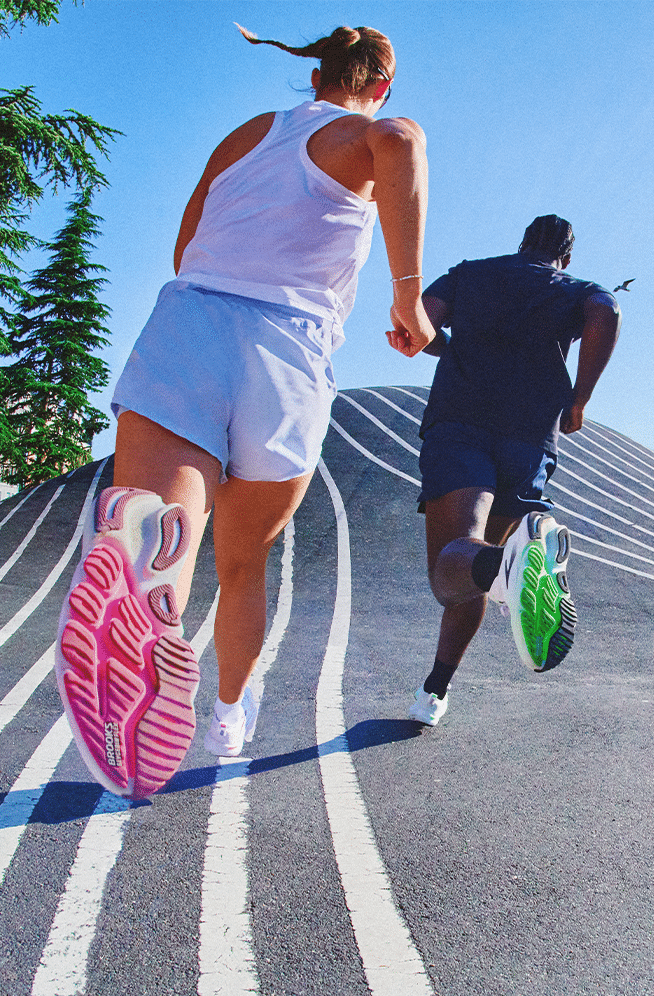
There was a moment in development where the team basically knew, “We’re onto something.” It was an early prototype that gave members of the team the immediate feeling of something they had not felt in a Brooks shoe before: the forefoot “opening” as it moved. Not loose. Not unstable. Just active.
That underfoot sensation arrived early. The upper came later.
Initially, the upper was almost an afterthought and did little to enable the foot to take advantage of the magical new midsole. With the midfoot lockdown especially important for this model, the team took inspiration from the materials and design of the Stealthfit upper that had been used in previous editions of the Glycerin and originally introduced in the (now retired) Levitate model. As is the case with most footwear design, the process doesn’t follow a straight line, it’s closer to a careful narrowing of chaos.
Wear Testing: The Best Feedback Is When Runners Echo Your Intent
When Brooks evaluated wear test feedback, they weren’t just looking for “I liked it.” They had a checklist:
- Do testers talk about the flexibility as a real experience?
- Do they still feel comfort and protection?
- Does the upper feel like an extension of the body, not a separate object?
The best signal was when runners started describing the shoe in the same language Brooks used internally: feeling more tuned into the run, feeling the foot working again, feeling like it was different from anything else they had tried. Some testers even reported feeling quicker or more responsive through toe-off, which was a fascinating side effect of the pods and DNA Tuned working together. This was the validation they needed. Brooks didn’t make another soft shoe or another supportive shoe, they made a different shoe, and one that borrowed elements from many predecessors.
How This Translates for Runners at Big Peach East Cobb
At Big Peach East Cobb, we fit a lot of runners who are living in the modern footwear world: more cushion, more geometry, more assistance. Many love it. But some quietly want a shoe that feels more like “me doing the work” again, without giving up comfort.
That’s where the Glycerin Flex gets interesting.
It’s built for runners who want protection but also want motion. It is premium cushioning, but with a more dynamic feel underfoot. And in a market where a lot of shoes are converging toward the same ride, this one is confidently its own thing.
If you want to try it, we’ll do what we always do: get it on your feet, compare it against a few familiar benchmarks, and let your body vote.
FAQs: Brooks Glycerin Flex
The Glycerin Flex is a premium-cushioned performance running shoe built to blend comfort with a more flexible, natural-moving ride, while staying inside the Glycerin family.
The Glycerin 23 is the classic “smooth and protected” experience. The Flex leans into adaptability and foot movement through its groove and pod design, creating a different sensation underfoot.
The Glycerin Max is more about assisted transitions and momentum. The Flex is more about the shoe moving with the foot, giving a more connected and flexible feel.
It is not positioned as a traditional stability model like the Glycerin GTS 23. The focus is flexibility plus stability balance, not added guidance features.
Runners who want premium comfort but miss feeling their foot engage more naturally. It can also be a great second shoe in a rotation for runners who like variety in ride and sensation.
Yes. Come by and we’ll help you compare it against other shoes in the Glycerin family or similar premium trainers so you can feel the difference immediately.