
Finding a better fit for long days of standing and walking
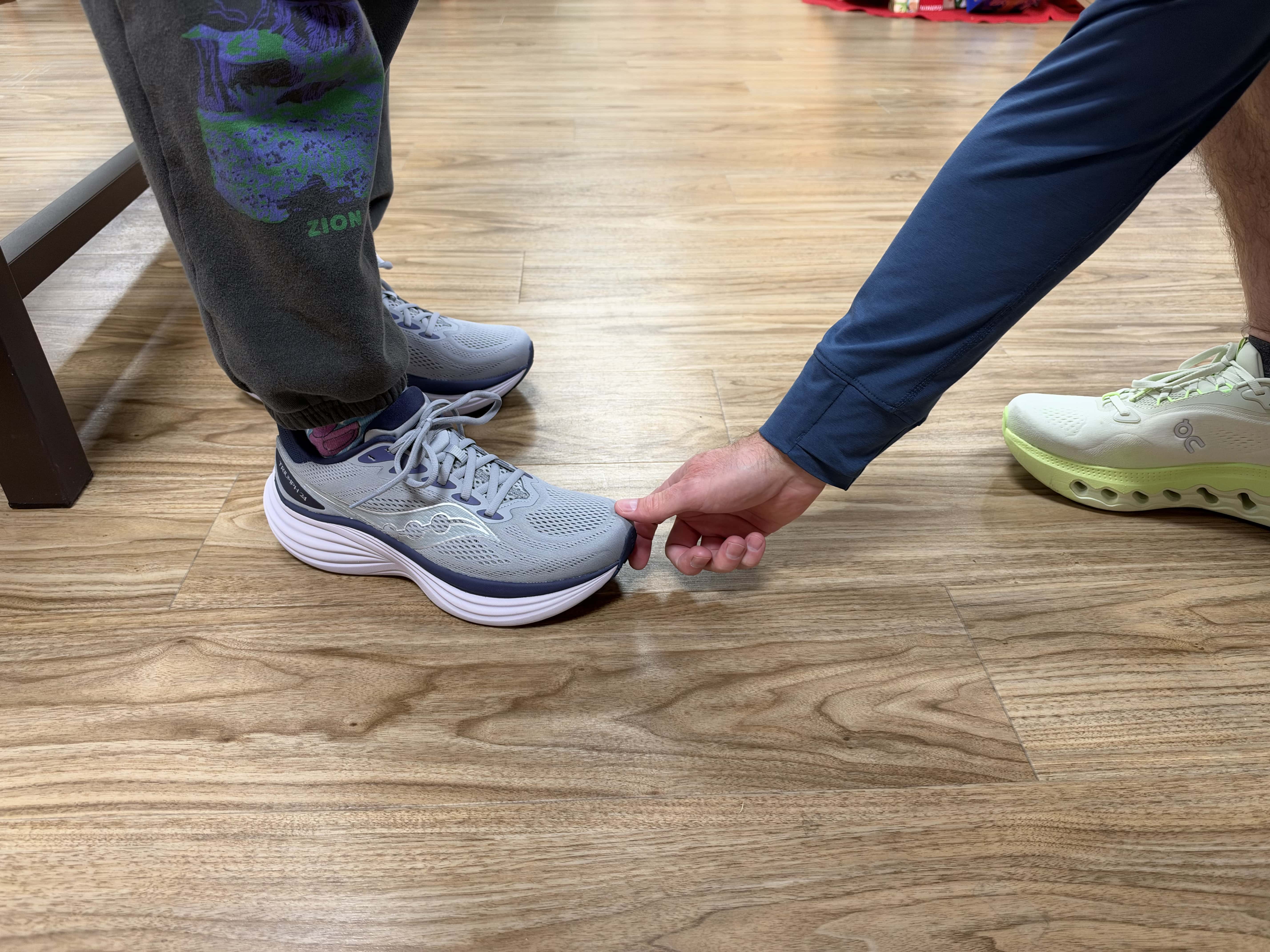
When you get home after a day on your feet, your shoes may come off before you’ve put down your keys. Before shopping for more cushioning, we’d want to know how much room your feet have inside them.
Our teammate Steve DeMoss has spent more than 20 years fitting shoes. Among people who mention foot pain, the issue he has encountered most often is a shoe without enough length, width or depth. In his experience, all three often need attention. That’s why fit is the first thing we like to check when someone mentions pain or discomfort.
It’s understandable that these details get overlooked. Most of us have a familiar shoe size in mind, but our feet can change, and every shoe is built differently. Length is a starting point. Width gets less attention, and depth may never enter the conversation.
If you played a sport in cleats, you may have learned to look for a snug fit. Which can make sense for the demands of that sport and the relatively short duration the cleats will be worn. (As an aside, rock climbing shoes take this to the extreme!)
For long days of standing and walking, we want generous room for your toes and a gentle, secure hug from midfoot to heel. Stability and underfoot feel matter too. These three questions help us sort out the whole picture, with extra time spent on the one that’s easiest to overlook.
What does your day ask of your shoes
“On my feet all day” can mean teaching in a classroom, standing behind a counter or covering miles through a hospital. Tell us how much you stand, how much you walk and what’s underfoot. Include any workplace footwear requirements.
Then get specific about what bothers you. Do your little toes feel crowded? Does the upper press down on your toes? Does your heel slip? Is the shoe comfortable in the morning and tight by afternoon?
Those details help more than “I need something comfortable.” Nobody comes looking for a shoe that isn’t comfortable.
Does your foot have enough room in every direction
This is the question we’d spend the most time on. Shoe size gives us a starting point. The shape of your foot and the space inside the shoe tell us much more.
Think of fit in three dimensions:
- Length gives your longest toe space before the end of the shoe.
- Width gives the ball of your foot and your toes room across the shoe.
- Depth gives your foot room from bottom to top, so the upper isn’t pressing down.
Together, those dimensions contribute to volume, the room your foot has inside the shoe. A pair can look plenty long and still be too shallow or too narrow. Your foot is three-dimensional, so we should think about fitting in three dimensions.
The generous space we’re looking for begins just ahead of the ball of the foot and continues through the toes. You should be able to spread and move them comfortably, with room above them as well as around them. A little empty space beyond the longest toe doesn’t make up for toes squeezed together farther back.
From the midfoot through the heel, the feeling should change to a gentle hug. Your foot feels held without being pinched. Your heel stays seated, and your foot doesn’t slide forward with each step. You shouldn’t need to haul on the laces to make the shoe stay with you.
That combination can take a little comparing. A longer size helps if the shoe is too short. When the length is already right, we may need a different width, more depth or a shape that better matches your foot. Going bigger until the toes stop complaining can leave the rest of your foot swimming.
Try both shoes with the socks you normally wear. Bring any insert or orthotic you use, since it takes up space too. If your feet tend to swell during the day, try shoes later in the day when possible.
Stand with your weight on both feet. Notice pressure at the sides, over the toes and across the instep. Wiggle and spread your toes, then walk and make a few gentle turns. Check whether the heel lifts or the foot slides. Tell us about any spot that feels crowded now, rather than hoping a break-in period will take care of it.
With a flexible fabric upper, being able to pinch a little material above your toes can be a good sign that the shoe isn’t pressing down. Materials vary, though, so we use that as one clue alongside how your toes move and how the shoe holds the rest of your foot.
How does the shoe feel when you stand and move
Once the fit is right, spend some time standing still. Does the shoe feel comfortably steady? Then walk at your normal pace. Does each step feel natural, including when you turn? Ideally, movement feels smooth and easy, almost as if the shoe is helping you along.
Cushioning is a preference worth comparing. Some people like a softer feel; others prefer something firmer underfoot. The softest shoe on the wall doesn’t automatically win an eight-hour shift. For some people, a very soft shoe feels less steady and takes more effort to walk in, a little like walking in soft sand.
Give each pair a full minute of standing as well as a walk around the store. Notice whether you feel balanced and comfortable. If a shoe feels wobbly or awkward, say so. You don’t need the technical name for whatever your foot dislikes.
A store visit can’t reproduce a whole workday. It can help you rule out obvious pressure, slipping and a feel you already know you don’t enjoy. Pay attention to small differences, too. Something that feels slightly off in the shop may become more bothersome over a long day.
Bring your workday to the fitting
Before you visit, ask Big Peach Footwear Guru, our footwear guidance service, a question like this:
“I spend [hours] standing and walking on [surface]. My current shoes feel tight [where], especially [when]. I want lots of toe room with a secure midfoot and heel. What should I compare, and what should I pay attention to when I try shoes?”
Bring those notes, your current shoes and your usual socks to Big Peach Running Co. East Cobb. Our Fit Process starts with how you’ll use the shoes, looks at your feet and movement, and gives you several options to compare on your feet.
Persistent foot pain deserves attention from a qualified clinician, even when you’re also working on shoe fit.
If you prefer to leave your shoes at the door, OOFOS sandals and slides are worth trying for a comfortable, supportive feel underfoot. Keep a “house-only” pair for indoors, and the great outdoors can stay outside.
The goal is to get home without urgently needing your shoes off. If you’re halfway through making dinner before you realize you’re still wearing them, that’s closer to what we have in mind.
FAQs about shoes for standing and walking
Only if you need more length. Width, depth and toe-box shape may be the issue. Check that added room at the front still comes with a secure midfoot and heel.
Look for space beyond the longest toe, across the forefoot and above the toes. You should be able to move and spread them comfortably while your heel stays seated.
Not for everyone. Compare softer and firmer cushioning while standing and walking. Choose the feel you find comfortable and steady after checking that the shoe fits well.
Big Peach Footwear Guru can help you describe your needs and identify worthwhile comparisons before you visit. It’s the knowledge you trust. Now on demand. Trying the shoes on is still how you judge toe room, heel security and the feel you prefer.