
If you have ever lined up at a local 5K, argued with your GPS about what “certified” means, or wondered why every turn on a course is actually marked like someone cared… you have been living in a world that people like Gary Jenkins helped build.
Gary is one of those rare figures who shaped the Atlanta running scene without needing a spotlight. He has been in the mix since the early days, directed or worked with a mind-bending number of events, and helped connect runners across the state back when “community” required something stronger than Wi-Fi. He is the owner-operator of Pacesetters Road Race Consulting, and if Georgia road racing has a long family tree, he is somewhere near the roots.
And yes, he has stories.
Before Running Was “A Thing” Here
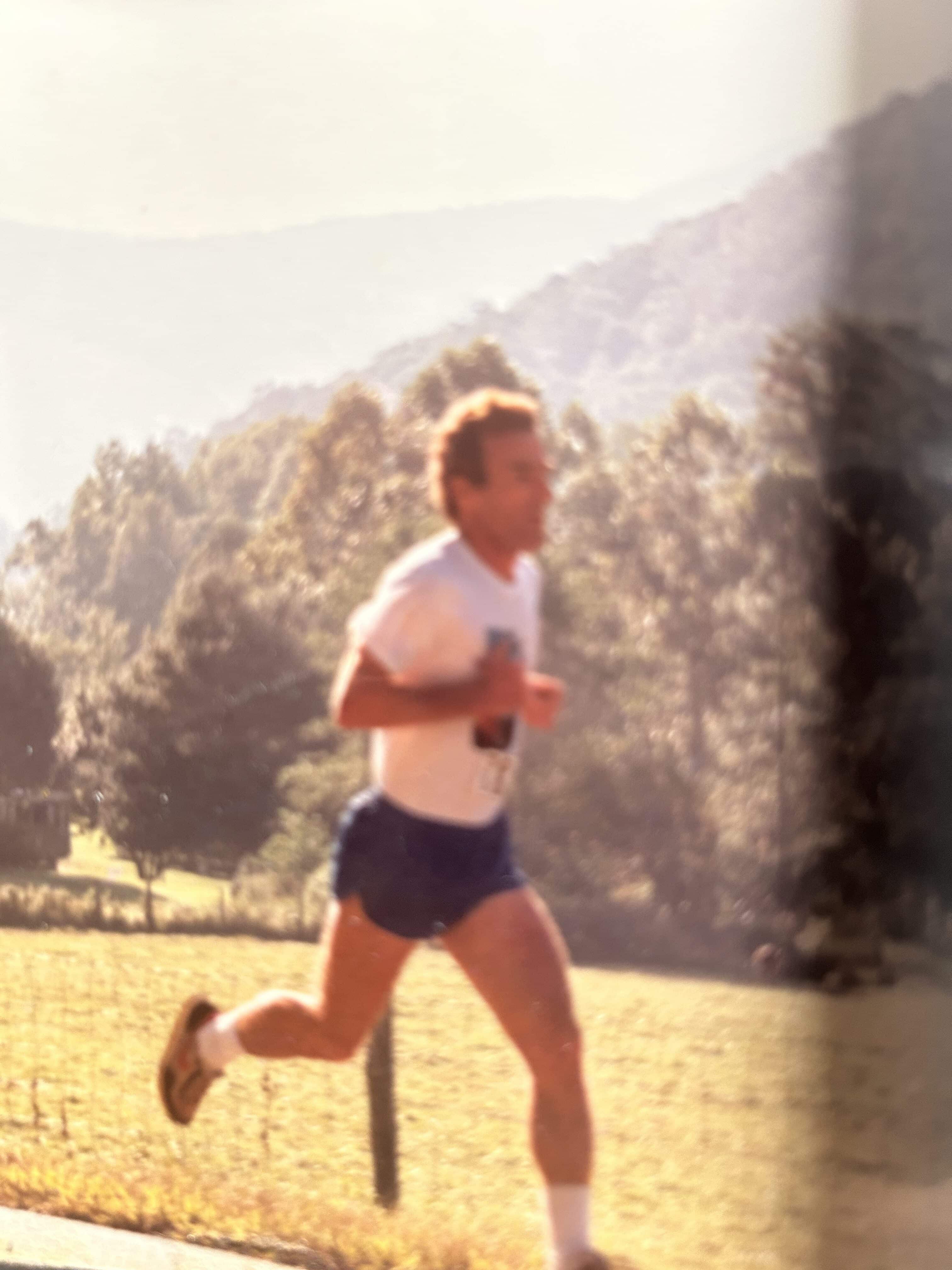
Gary is an Atlanta native who found running the old-fashioned way: he got nudged out of one sport, tried another, and realized he could suffer politely for long periods of time. In high school, he ran track and cross country, mostly self-taught because coaching and resources were not exactly overflowing back then. He later ran cross country at Georgia State, back when the program was strictly cross country and the “tools” were essentially grit and whatever you could learn by doing.
Then life happened. Marriage, kids, work, the usual. Running went on hiatus for about 11 years. And then, out of nowhere, Gary decided to see if he could run to the end of his street and back without stopping.
He could.
That tiny test turned into a return to running, and eventually, the kind of running story that sounds like fiction until you remember this is what the pre-internet era was like.
The “Little Race” That Was Actually a Marathon
At one point, Gary met with a Georgia State coach about getting back into things. The coach suggested a “little race” that weekend. It was the Atlanta Marathon. With almost no training, no GPS, no phones, and courses that were not exactly coned and polished, Gary found himself out there doing what many runners have done at least once: questioning every decision that led to that moment.
He finished, though. And if you want a quick summary of Gary’s personality, it is this: he will laugh about it now, but he will also never let you live it down.
Building a Running Community in Douglas County
In the late 1970s, Gary helped form a running club in Douglas County called the Douglas County Coasters, a name that makes sense the first time you run those hills. The club wanted a way to fund meals, parties, and get-togethers, so they decided to put on a race. That race was Joker’s Wild, a five-mile event where runners collected a poker card at each mile marker. At the finish, you had a five-card hand. Best hand wins.
It was simple, ridiculous in the best way, and brilliantly social. It also got written up in Runner’s World in its first year as one of the “don’t miss” races. Not bad for a bunch of runners trying to pay for club dinners.
If you are wondering what this has to do with today’s world of Georgia road races, here is the connection: Gary has always understood that races are not just about time. They are about people, stories, and a shared excuse to be outside together.
Why Courses Got Better (And Why Your Race Has Cones)
One of Gary’s underappreciated contributions is the way he approached course management. He talks about races back then where you might get a sign at a corner… maybe. Cones were not a given. Volunteers were not always there. You could get lost in the middle of a marathon and just sort of hope your instincts were good. Gary became a guy who insisted on doing things the right way, including fully coning courses. It was more work, and not everyone loved that part. The city did. And runners did too, even if they did not realize who to thank.
The Magazine and the Grand Prix That Connected the State
In 1983, Gary started Georgia Runner magazine (originally “Running in Georgia,” later evolving into other names over time). This was not a casual side project. It was a way to tell stories, share results, and keep the running community connected across a state that is bigger and more diverse than most people realize.
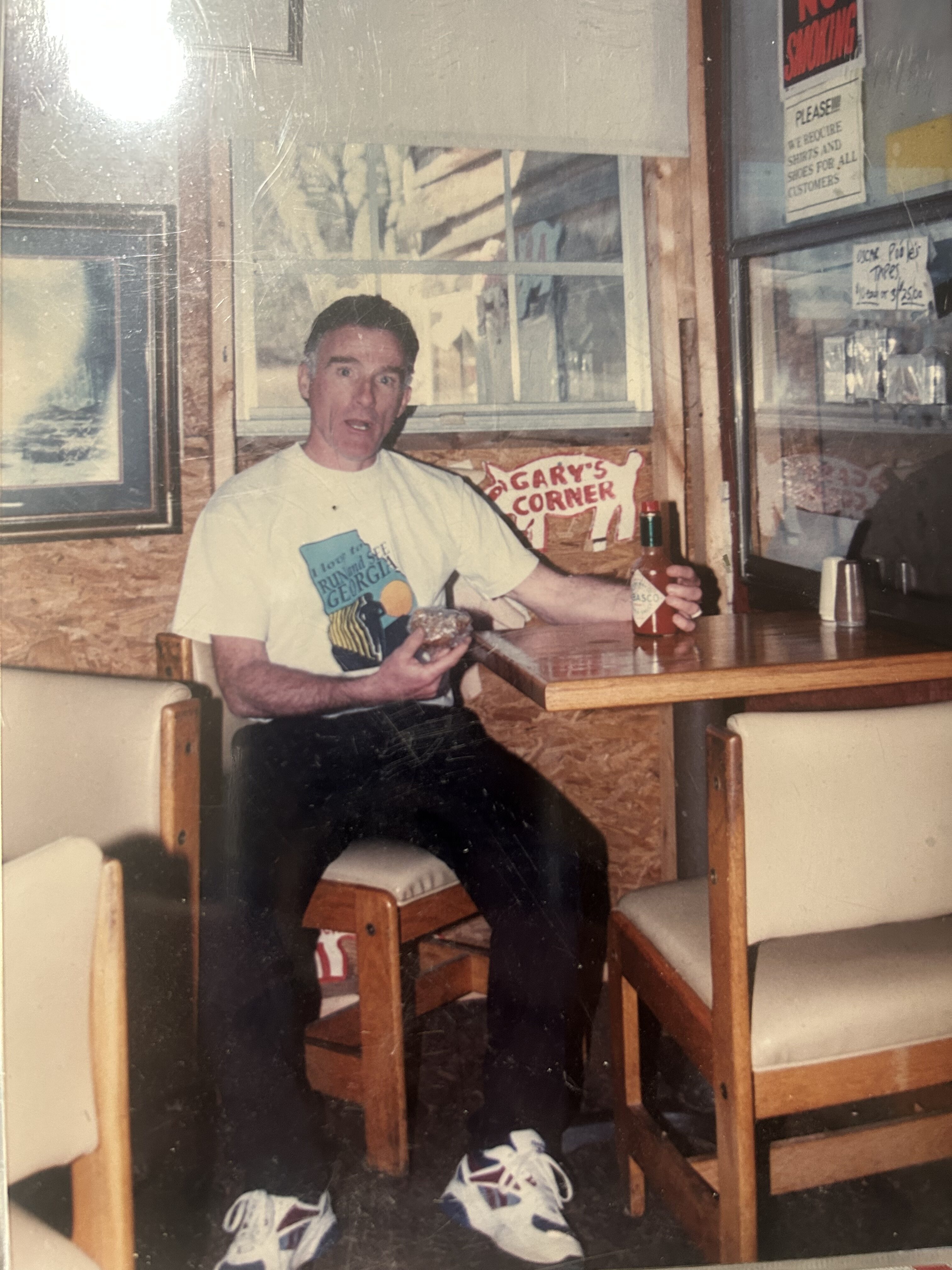
Then, in 1989, he launched the Run & See Georgia Grand Prix race series, inspired by something he experienced while living in Kansas City: runners traveling together, racing every weekend, building friendships, and turning competition into a traveling community.
At its peak, the Grand Prix included an astonishing 442 races in a year. That is not a typo. Four hundred forty-two. Gary believes it may be the largest Grand Prix ever assembled in the United States, and it represented roughly 70,000 individual runners across the state in that peak era.
If you want the purest “Gary” detail, it is this: early on, much of the results tracking was manual. At one point, after months of work, he hit the wrong button and wiped out nine months of data. A friend later created a “Gary-proof” program to prevent future disasters. That is friendship. Also, one runner, Roger Keel, reportedly completed 154 Grand Prix races in a single year. That is not a running schedule. That is a logistics operation with legs.
Race Directing at Full Volume
Gary’s busiest year included working with or directing 96 races. That is nearly two races a weekend, every weekend, with some weekends requiring creative math. He put 54,000 miles on his car that year while promoting the magazine and working events across Georgia. This is the kind of effort that creates an ecosystem. Races in small towns get better when experienced runners show up and expect a solid event. Communities benefit when runners come in for festivals and weekends. The whole state gets more connected. That is what Gary helped do, one start line at a time.
The Stories That Stick (Because Of Course They Do)
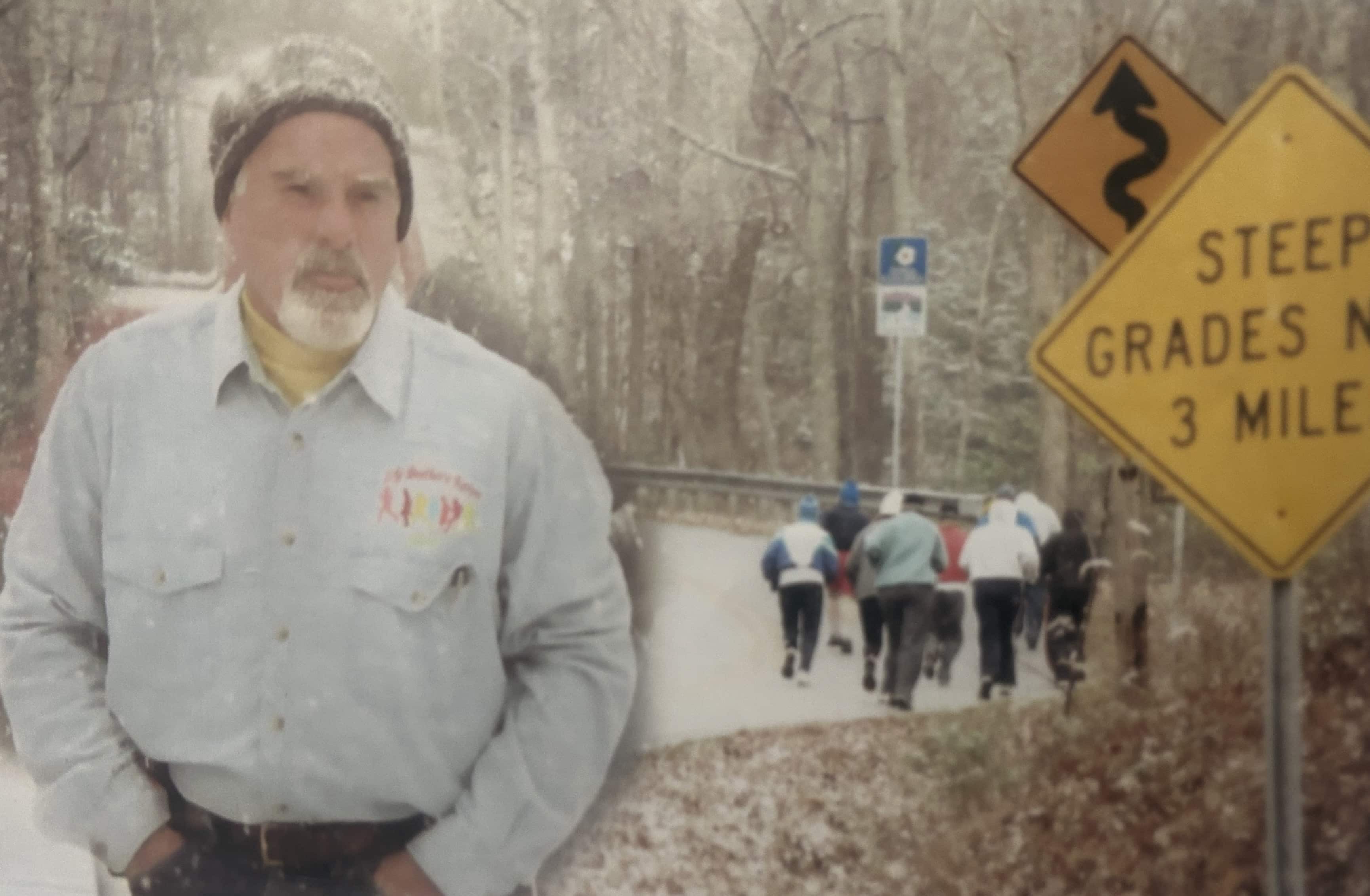
Ask Gary about favorites and Polar Bear comes up fast. The Polar Bear 5K is one of his all-time favorites, and at its peak it drew around 1,700 participants. One year, before computerized timing and the modern registration world, they had roughly 900 registered going into race day… and 700 people signed up on race day. Gary informed the race director that they would never do race-day registration again. Then technology arrived and saved everyone’s sanity.
He also tells a story about a night race at Perimeter Mall where the female winner came into the finish line glowing, high-fiving, celebrating, soaking in the energy. Later they learned she could not hear any of it. She was simply happy, fully in her own joy. It is hard to beat that.
Then there is Brasstown Bald Buster, a brutally tough 5K with “one little hill,” as the infamous shirt claims. Weather changed every year because you moved through three temperature zones on the way to the summit (the highest point in Georgia).
And one of the most unforgettable stories: an incredible runner named Anne Patrick, in her 70s, fell through her ceiling while doing insulation, broke her ankle, made her famous homemade soup for the post-race celebration anyway, and completed Brasstown Bald Buster on crutches to protect her Grand Prix standing. That is Georgia running culture in one scene: stubborn, hilarious, inspiring, and somehow soup-based.
What Gary Is Proud Of (And Why It Matters)
Gary’s proudest professional achievement is that peak year of the Grand Prix: the scale, the reach, the sheer proof that running in Georgia had become a real statewide community.
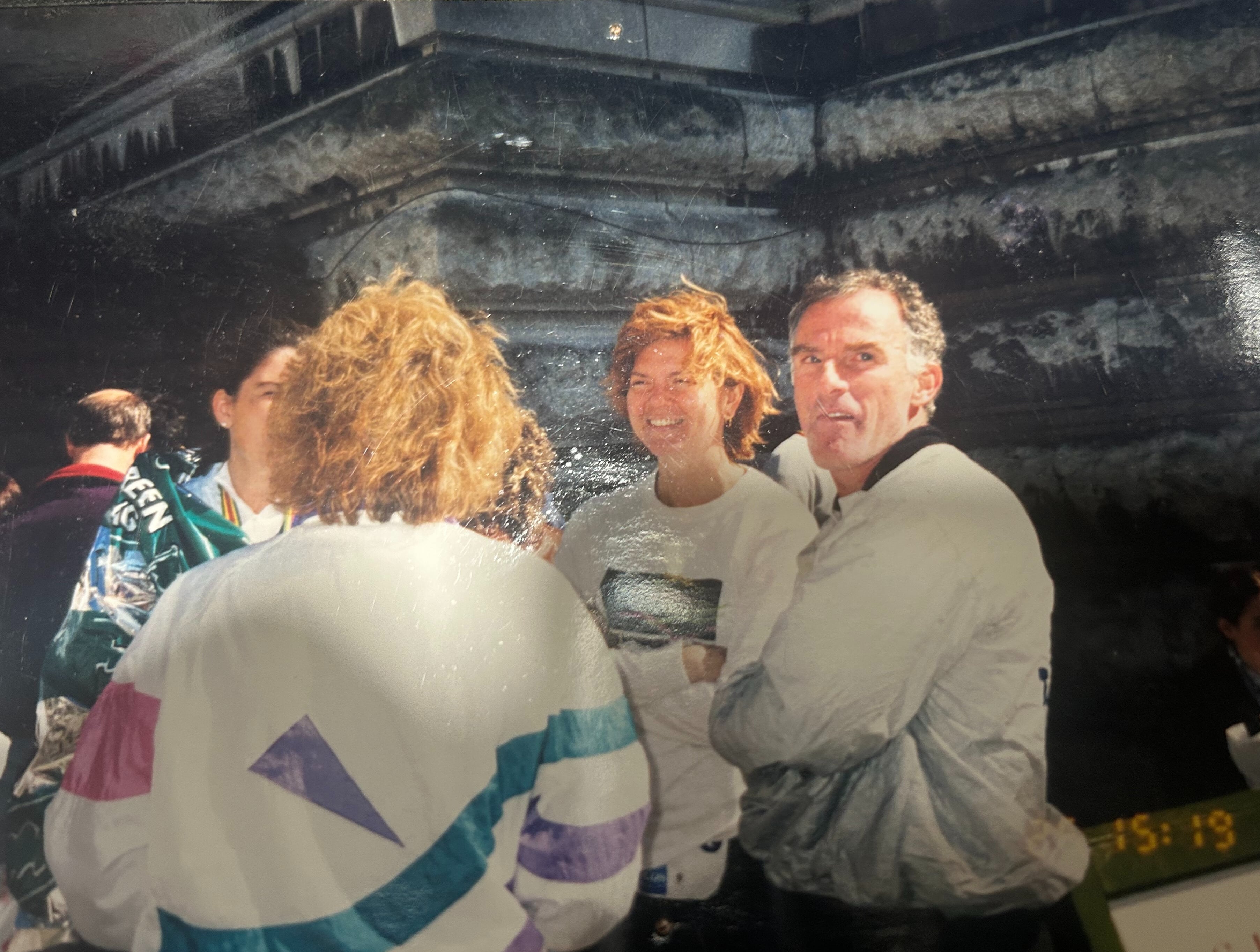
But his proudest moment overall is personal. He worked the World Games in Birmingham for his son, who is now a director of sporting events and has taken up running. The same kid who once was not thrilled about waking up at 3:00 a.m. to help at races eventually came around. Gary got to be there for it, not as “the running guy,” but as dad. That is the best kind of legacy. Quiet. Real. Built over time.
Why We’re Telling This Story at Big Peach East Cobb
At Big Peach East Cobb, we spend a lot of time helping people find the right shoe, the right fit, and the right plan. But the deeper mission is participation. People like Gary Jenkins helped build the environment where participation is even possible. He helped make races better, safer, more connected, and more meaningful across Georgia.
So if you have not run a local race in a while, consider this a nudge. Not because you need a medal, but because the local race scene is one of the last truly analog community builders left. And because Gary would probably tell you the same thing: just get out there, move, and have fun.
FAQs
Gary Jenkins is a longtime race director and organizer who has helped shape the Atlanta running scene and running in Georgia for decades through race directing, publishing, and statewide community-building.
Gary frequently highlights events like the Polar Bear 5K and the Brasstown Bald Buster 5K as memorable staples of Georgia’s race culture. He’s also prominently involved in the Kettle Krush 5K these days.
From Gary’s perspective, the biggest shift is the pre-COVID vs. post-COVID era, plus changes in participant demographics, expectations (medals, shirts, experience), and how younger run-group culture does not always translate into traditional race participation.
Start with a local 5K or group run, and stop by Big Peach East Cobb for guidance on shoes, training basics, and local event options that match your goals.